

Rock Climbing
Which Climbing Course Is Right for Me? Your Pathway from Beginner to Lead Climber
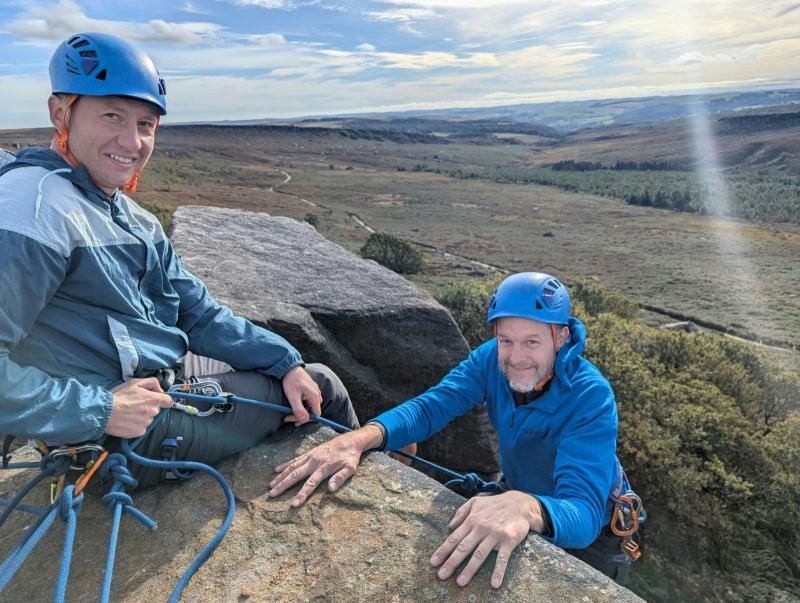
It's one of the questions we get asked most: "Which course should I book?" Maybe you've never climbed before. Maybe you've been climbing at the wall for a while and want to take it outside for the first time. Either way, the honest answer is: it depends on what you want to do next.
This guide explains how our courses fit together, so you can pick the right starting point and the right next step.
First, a bit about climbing in the Peak District
The UK, and the Peak District in particular, is first and foremost a trad climbing area. On trad (traditional) routes the leader places their own protection (nuts, cams and slings) in the rock as they climb, then the second removes it. The Peak's famous gritstone edges, like Stanage, Burbage and Froggatt, are almost entirely trad.
Sport climbing, where the route is protected by fixed bolts and you clip quickdraws as you go, is what most indoor lead walls are modelled on. There is good sport climbing in the Peak, mainly on the limestone, but there's far less of it than trad.
So if you want to climb outdoors on the routes the Peak is famous for, trad skills are what open the doors.
If you want to lead trad climbs
This is the most common goal, and it's a three-step pathway:
Step 1: Beginner. The essentials on real rock: fitting a harness, tying in, belaying, climbing movement and, usually, an abseil. This is the right start whether you're completely new or an indoor climber heading outside for the first time, as climbing on gritstone feels very different to following coloured holds.
Step 2: Improvers. Seconding routes, placing and removing gear, and building top rope anchors. By the end you should feel confident climbing as a second with an experienced leader.
Step 3: Learn to Lead Trad. Placing protection on the lead, building belays, managing the rope and leading your own routes, with the instructor's support reducing as your confidence grows.
You can take these one at a time, with a few weekends of practice in between, which many people find helps the skills sink in.
Or combine steps 2 and 3: Indoor to Outdoor
After the Beginner course, you can go straight on to our Indoor to Outdoor course. It combines Improvers and Learn to Lead Trad into one four-day course, taking you from seconding through to leading your own trad routes, with around 40 hours of climbing on Peak District crags.
If you only want to lead sport climbs
If your aim is purely to lead bolted sport routes, the pathway can be shorter. Many of the skills you need, such as lead belaying, clipping and falling safely, can be learned and practised at an indoor climbing wall.
Once you're climbing regularly and leading confidently indoors (around 6a is a good guide), you could come straight on to our Learn to Lead Sport course. It covers what's different outside: reading the rock, checking fixed gear, lowering off and stripping routes safely.
Just bear in mind that sport climbing on its own limits where you can climb in the Peak. If you think you'll want to enjoy the gritstone edges too, it's worth adding the trad pathway at some point.
Quick guide
- New to climbing, or an indoor climber going outside for the first time? Start with the Beginner Rock Climbing Course.
- Want to lead trad? Beginner, then Improvers, then Learn to Lead Trad. Or Beginner, then Indoor to Outdoor.
- Only interested in sport? Build experience and lead indoors, then the Learn to Lead Sport Climbing Course.
Still not sure?
Every climber is different, and plenty of people don't fit neatly into one box. Give us a call on 01433 424164 or drop us an email and we'll happily talk it through and point you to the right course. We can also run any of these as a private course, tailored to you.