

Qualifications
I've Led Flying Buttress, So Why Bother With My RCI?
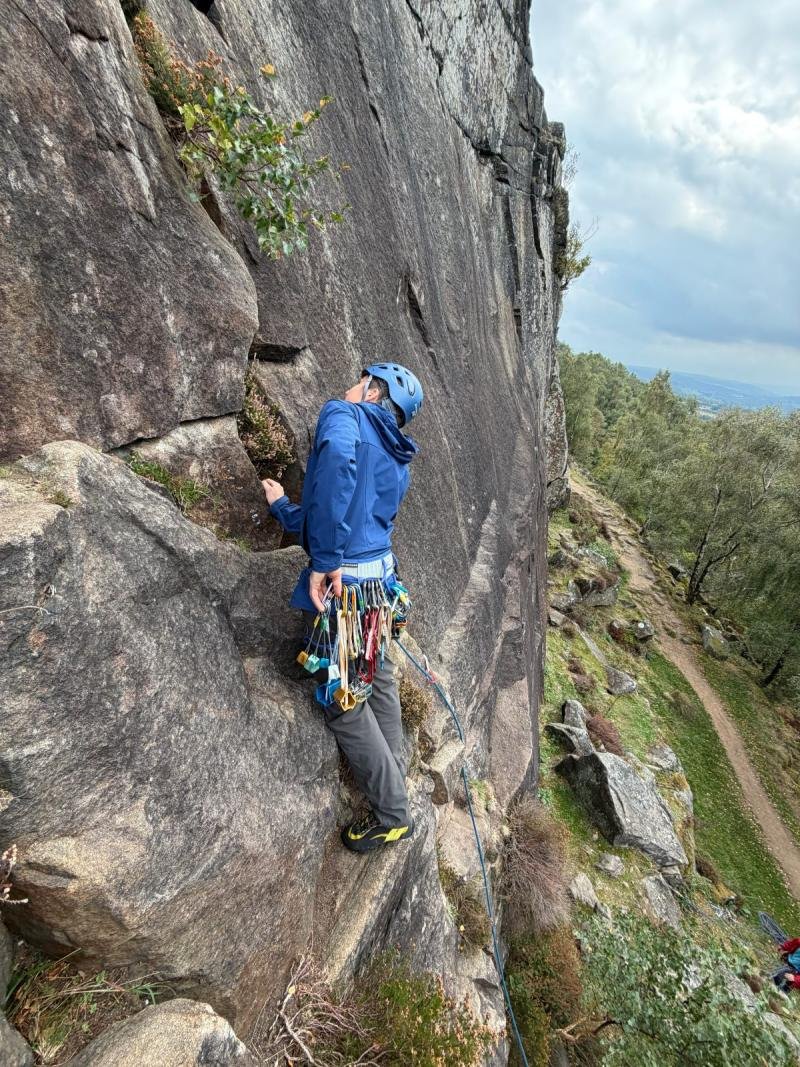
How could you benefit from a Mountain Training course?
The Rock Climbing Instructor (RCI) course is popular with people who want to introduce others to climbing on single-pitch crags with easy access.
It offers an assurance of basic competence but, as with all Mountain Training courses, successful candidates need to consolidate their skills through personal experience. That's crucial, as the RCI is an entry-level standard for instructing others.
The minimum requirements for the course are to be 18 or over, with at least 12 months' climbing experience and 15 led routes using leader-placed protection.
So you could easily have someone who joins a university climbing club in their first year and finds themselves running the show and supervising others by their third.
I'd been climbing for 20 years when I decided to do my RCI. There were four of us on the course, trained and assessed together by the same instructor, Ed. The others hadn't been climbing for long, and it was pretty terrifying watching them lead, place gear and rig belays at first, which is why they'd booked a course, I suppose! When we returned for our assessment it was clear they'd spent time practising and consolidating the skills from training, and all turned out well in the end.
One trick in particular left me agog at its simplicity: the overhand knot. Until then the overhand had been anathema to me. I believed, probably after overhearing it in the pub, that it would at best weaken anything it was tied in and at worst come undone under the merest load. How could something so basic be safe? Thanks to my RCI, the overhand is now my favourite knot. We used it to:
- equalise anchors with a sling, in two different ways
- create a powerpoint anchor for group abseils with a rigging rope
- link anchors for a fixed-rope abseil
- set up a sling for an accompanied abseil
- join two ropes for a full-length abseil
It doesn't stop there. On the Mountain Leader course you're also shown how to use the rethreaded overhand during unplanned use of the rope on steep ground.
One thing I'd avoid using the overhand for is equalising runners with a sling, especially Dyneema. The guy in the pub was right: tying a knot in slings, cord or rope does weaken it. But when they're part of a correctly equalised anchor system, the forces on them are reduced to an acceptably safe level.
What I'm saying is that the RCI was an education that helped fine-tune my own skills with a few simple yet powerful techniques. It made me reassess my ropework and become a more efficient climber, and I stopped doing things a certain way just because that's how I'd been shown as a beginner.
So, whether you're starting out or still climbing in Tracksters and a Patagonia Snap-T, book an RCI course. You might learn something too.
Please note: the RCI doesn't qualify you to teach lead climbing. That's another ball game entirely, needing at least the Mountaineering and Climbing Instructor award, a full professional qualification that can take years to achieve.