

Mountain Biking
Top 5 Tips for Your First Mountain Bike Adventure
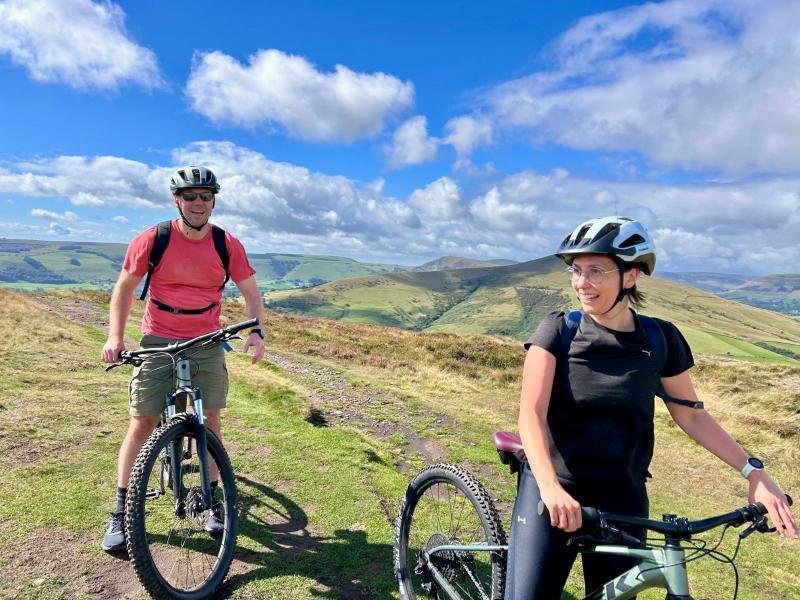
"It's just like riding a bike, right?" We've all heard it, and we might even have said it, but this phrase bugs me. Yes, it implies that once a skill is learned it's seldom forgotten, and yes, most of us grew up riding bikes in some shape or form. But it also implies a simplicity that can hold people back when they start out in mountain biking.
As head mountain bike instructor at Pure Outdoor, I get the privilege of introducing lots of people to mountain biking, and a common trait is that people think they should already know how to do it. They can get surprised, frustrated or embarrassed when it turns out they don't.
Take skiing as an example. If you're learning to ski, you're unlikely to strap on a pair and jump off the nearest mountain. You'll want to learn some techniques first (like how to stop!) and you'll probably get someone to show you the basics.
So why should mountain biking be any different? If anything, it's more important to correct all those bad habits we picked up pulling skids in car parks with our mates. To help you get started, here are my top 5 tips for starting out in mountain biking.
1. Get a bike that works and fits properly
It sounds obvious (you wouldn't expect a good time skiing in boots two sizes too small!) but it's surprising how many people dust off the 20-year-old rust bucket from the back of the shed, or borrow a friend's or child's bike, and expect to have a good time. Bikes are expensive and you don't have to shell out just to see if you like it (mountain biking can be enjoyed on all sorts of bikes), but more often than not your best bet is to hire a suitable bike to get started.
That way it's the right kind of bike for the trails you'll be riding, it fits you properly and, most importantly, it's been serviced and set up by a professional, with all its bits in the right place. We can arrange bike hire with our courses and guided days, so just ask when you book.
2. Protect yourself
When mountain bikes first appeared we had to wear helmets that looked like massive polystyrene mushrooms (mine had a neon blue Lycra cover!) and, for some reason, people weren't keen. Things are different now and there are no excuses. No one plans to fall off but, as with any new skill, there's always the chance of coming unstuck, and a helmet can make all the difference.
Helmets are now comfortable and lightweight, and they're compulsory on all our courses and guided days. Protection doesn't stop there, though: I'd also recommend gloves (and not just to keep your fingers warm). Your hands are usually the first thing to break a fall, and scuffed palms make holding the handlebars much harder. If you're pushing more advanced skills, consider knee pads and other protection too.
3. Pack and dress for the hills
Being on two wheels doesn't make the hills any less serious. In fact, an unexpected problem could mean an even longer walk back to safety. Pack as you would if you were heading out on foot: waterproofs, spare layers, and enough food and drink. If you're heading out without a guide, take emergency kit too: a first aid kit, an emergency shelter, and tools and spares for your bike. If you're not sure how to use any of these, go out with a guide or instructor first.
4. Plan the right route
Where to go is one of the biggest challenges for a beginner. Not all off-road trails are equal, and one of the beauties of the sport is the huge range of difficulty, from gentle gravel trails to seemingly impossible lines off cliff faces and everything in between.
Whichever bike you ride, pick the wrong route and at best you're in for a long walk, at worst you could quickly get out of your depth. It's also easy to ride the right trail in the wrong direction (uphill!) or pick the wrong weather or time of year. There's a lot to consider.
One solution is a trail centre, with purpose-built trails graded for different abilities. For me that's a bit like an indoor climbing wall: great fun and an easy way to get started or learn new skills, but not the whole story. In the UK we're lucky to have an amazing network of bridleways and byways for exploring the countryside by bike, but it's worth learning what to look for before heading into the unknown.
5. Relax and keep an open mind
You've got your bike and kit and you're ready to hit the trails, but that's only the first pedal stroke. Now you need the skills to tackle the terrain. This is the really rewarding bit and, if you've picked the right trails, you'll quickly see real progress.
If you're new to mountain biking, some things will feel counter-intuitive. "What? Go over that rock?", "Don't sit on the saddle?", "Brake LESS?!" Old habits need unpicking, and almost always the best advice is to relax and stay loose.
Believe it or not, your bike is great at rolling over roots, rocks and rough stuff. Your job is just to let it! Once you do, you'll find it's far less scary than it first looks, and the looser you get, the easier and more fun it all becomes.
As Einstein put it: "Life is like riding a bicycle. To keep your balance, you must keep moving."